Meet the team: Savannah, Highly Specialist Physiotherapist
Published on: 18/09/26
Rehabilitation Awareness Week, is an initiative led by the Chartered Society of Physiotherapy. This is the perfect time to introduce you to the team behind The Children's Trust's Community Rehabilitation Service, starting with Savannah, one of our Highly Specialist Physiotherapists.
We caught up with Savannah who works with the children we support, helping them rebuild strength, movement, and independence, not just in the clinic, but back in their own homes, schools, and communities.
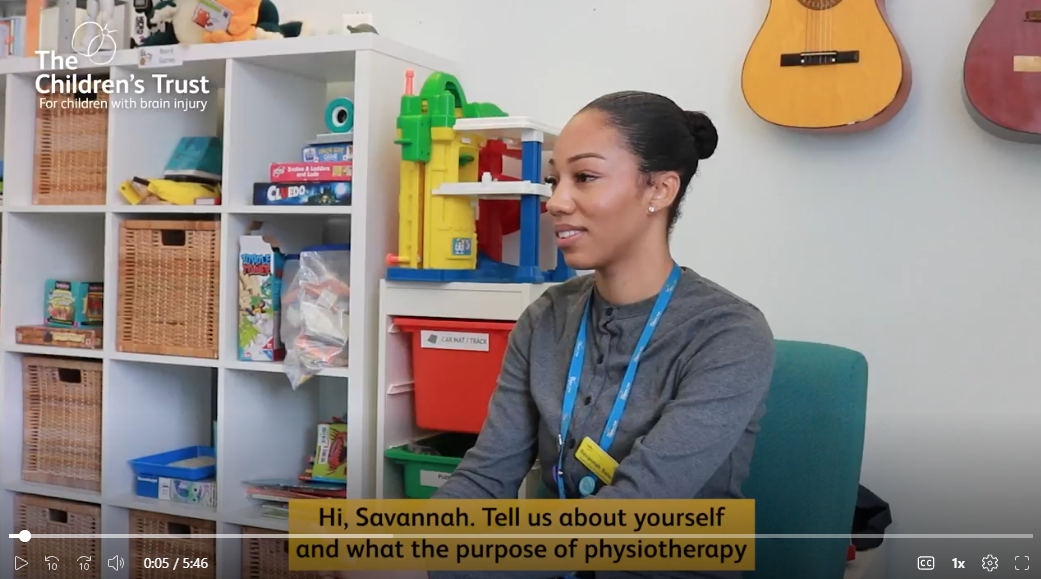
Q1. Tell us about yourself, and what's the purpose of physiotherapy for children who have acquired brain injury or neurological condition?
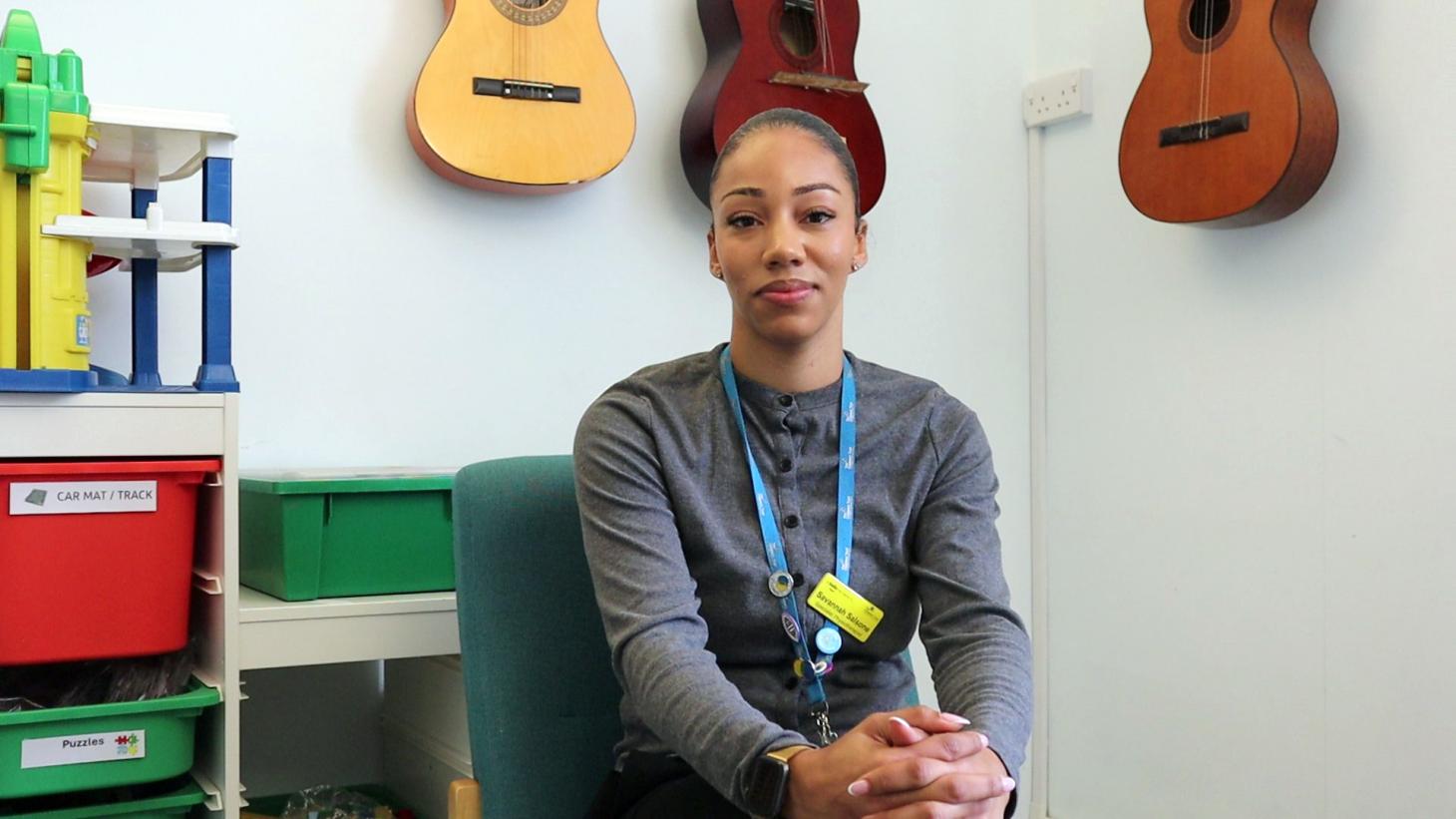
I'm Savannah, a Highly Specialist Physiotherapist, and I've worked at The Children's Trust for five years. I love working with children and helping them build the skills and confidence they need to participate in everyday life.
The aim of physiotherapy after a brain injury or neurological condition is to help children improve their movement, balance, strength and independence. I support them to achieve their goals and take part in activities at home, school and in their community. Community physiotherapy can be difficult to access, so we help bridge that gap or complement the therapy support families are already receiving.
Q2. When a child first comes to you, what does your assessment involve?
When a child first comes to us, I assess things like their movement, strength, balance, muscle tone, range of movement, and overall independence. I also spend time understanding what life looked like before their injury, so we have a clear baseline to work from and understanding of expectations.
We take a holistic approach, working closely with other professionals such as occupational therapists, speech and language therapists, psychologists, and medical teams where needed. Most importantly, we find out what the child and their family want to achieve and use outcome measures to help track progress throughout their rehabilitation journey.
Q3. What equipment or technology do you use, and what does it actually let you do that you couldn't otherwise?
We now have access to technology such as VR headsets and Lusio, which can be used alongside conventional physiotherapy both in the community and during outpatient rehabilitation. For children attending sessions at The Children's Trust, we also have access to specialist facilities such as hydrotherapy, soft play, and neurotechnology such as the Innowalk, tyromtion equipment and electrical stimulation. These technologies don't replace physiotherapy, but can be used to help us increase practice, improve engagement, and work on skills like walking, balance, strength, and weight-bearing in ways that wouldn't otherwise be possible.
They also allow us to trial equipment and interventions to make recommendations for ongoing support.
I always try to make sessions age-appropriate. For younger children, that might mean disguised through play-based activities, whereas for older young people I focus on meaningful, real-life goals. For example, if someone wants to get back to football, I might use football drills or a one-to-one game to work on the physical skills they'll need to return to the sport safely.
Q4. How do you decide when a child is ready to progress
Progression is guided by standardised outcome measures; alongside the treatment plan we've built with the child and family. We start with short-term goals that can be achieved relatively quickly, then move towards longer-term ones, adapting the plan as we see consistent progress.
For us, progress isn't just physical, it's a combination of skill gains, it also means testing safety: once a child is safe doing something in a controlled environment here, we look at whether they're just as safe doing it on different terrain, out in the real world. Often, progress is evident through a child's increasing confidence, independence, and acquisition of new skills, as well as their ability to participate more fully in activities that may have previously been challenging.
Q5. Talk us through a case (anonymised)
We've had children progress through hydrotherapy with us and then go on to enjoy swimming with their families at their local leisure centre. I've been sent photos of children on holiday at waterparks and in the pool or confidently enjoying the wave machine after a block of hydrotherapy, which is fantastic to see because it shows they're taking those skills and confidence into everyday life.
In another case, over a 12-week placement, a child progressed from being unable to tolerate their feet being touched or handled by therapists to tolerating shoes and standing with an aid again after a prolonged period of bed rest. On paper, that might seem like a small step, but for that child and their family it was a huge achievement.
Something I understand is that success looks different for every child. Not every outcome is a big milestone, but that doesn't make it any less important. Sometimes what seems like a small achievement can make a huge difference to a child's quality of life and to their family's day-to-day experience. That's why we always focus on the goals that matter most to each individual child and family.
Q6. What would you want a parent to understand about physio that isn't obvious?
One thing I'd like families to know is that physiotherapy isn't always hands-on. A big part of our role is empowering parents, carers, and the people around a child to support their progress in everyday life. Often, the greatest opportunities for practice happen at home, at school, or in the community, not just during therapy sessions. Sometimes that means spending less time treating the child directly and more time giving families the knowledge, skills, and confidence to carry that progress forward themselves.
Q7. How do you make sure progress transfers to school or home life?
I work with the whole team around the child; their school, teachers, friends, the wider community, to try and embed therapy into every part of their life, not just a session slot. That might mean I go into a child's PE lesson rather than them coming to me for 'physio at eleven o'clock.' We try to work around a child's actual routine. And where we can, we give parents written guidance so they can match at home what we're doing in sessions."
That's what physiotherapy here is about - helping a child build the skills and confidence to get back to their own life, in their own community. If you're a parent thinking about how we could support your child, or a professional considering a referral, we'd love to hear from you.
To watch the full video, visit our YouTube.